
Customer 360 Profiles, CRM Segmentation & Lifetime Value
Build persistent customer relationship records, track Lifetime Value (LTV), segment high-value shoppers, and view historical omnichannel conversations across Instagram, WhatsApp, and Web.
- Consolidate customer data across web storefront checkouts, WhatsApp chats, and Instagram DMs into a single unified record.
- Track customer financial metrics automatically: Total Orders, Cumulative Spend (LTV), Average Order Value (AOV), and Last Active date.
- Apply custom tags and internal merchant notes to document bespoke requests, tailoring sizes, or special delivery instructions.
- Protect your delivery budget by tagging High Return Risk shoppers for upfront verification before dispatching Cash on Delivery parcels.
Before configuring this feature, confirm that your store meets the following requirements:
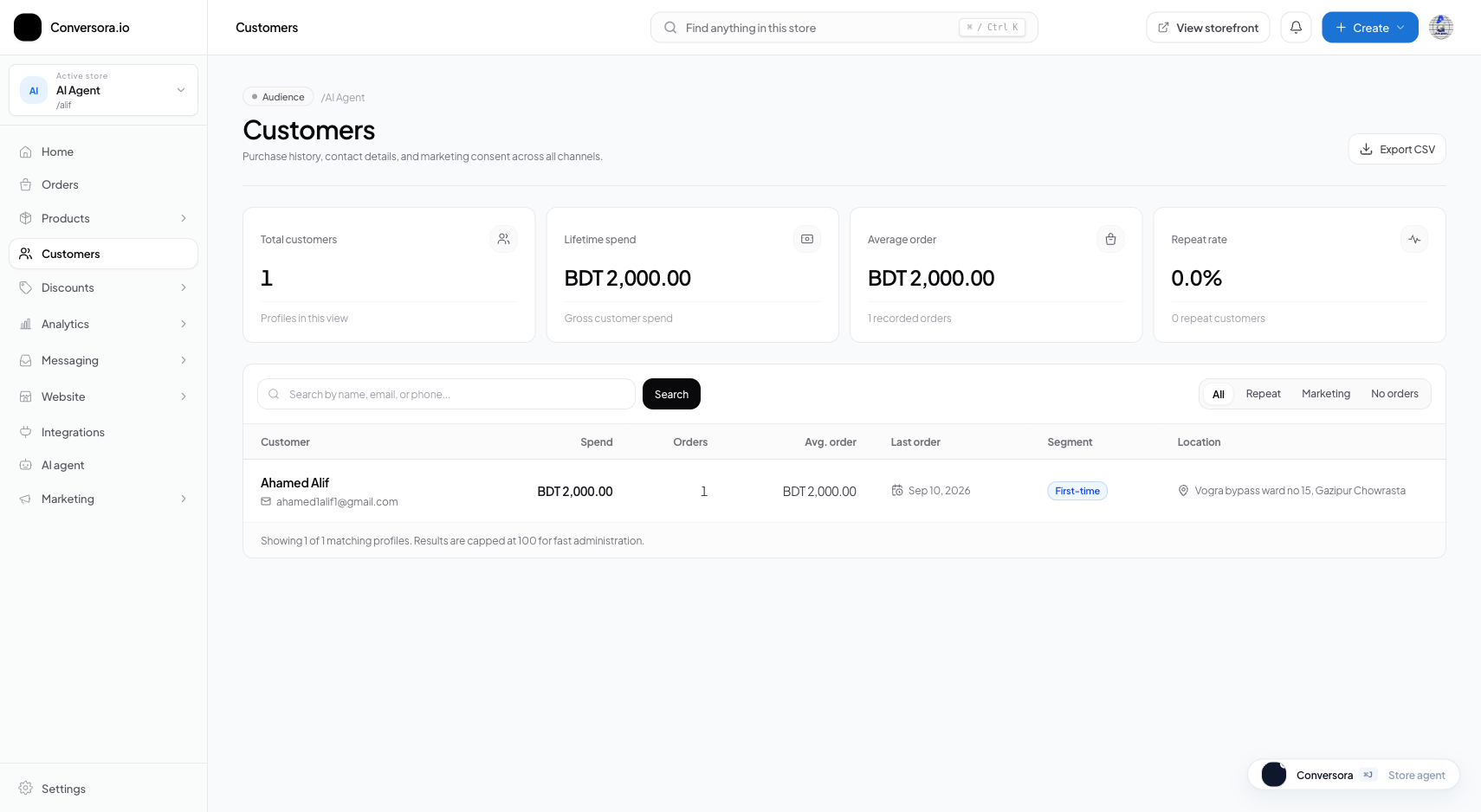
Customers CRM console showing unified shopper directory, lifetime value metrics, acquisition channels, and order counts.
1. The Single Customer View & Financial Telemetry
Navigating to Customers (/admin/customers/[store]) reveals your complete shopper directory.
Selecting any customer opens their detailed profile drawer displaying: - Contact Information: Full name, primary verified phone number, email address, and saved shipping addresses. - Commercial KPIs: Total completed orders, Net Lifetime Value (LTV), Average Order Value (AOV), and Acquisition Channel (e.g. Instagram DM vs Direct Storefront). - Omnichannel Conversation History: Recent chat threads handled by Aura Bot or your human support staff, allowing you to review promises made to the customer.
2. Strategic Customer Segmentation
Segmenting shoppers enables you to run targeted campaigns and protect your margins:
- VIP Shoppers: High-spend customers (e.g. cumulative spend > 10,000 BDT). Prioritize their orders, include complimentary promotional gifts, or grant exclusive early access to seasonal collections.
- First-Time Buyers: Customers who just placed their first order. Send follow-up surveys or welcome discount codes to encourage a second purchase.
- At-Risk / Lapsed: Shoppers who have not purchased in over 60 days. Re-engage them via targeted SMS or WhatsApp broadcast offers.
- High Return Risk: Customers with a history of refusing Cash on Delivery parcels upon courier arrival. Require advance shipping charges via bKash before shipping to prevent costly return freight.
Practical Business Scenarios
How leading merchants implement this functionality in daily operations:
Troubleshooting & Common Issues
Diagnose and resolve frequent failure points quickly:
Frequently Asked Questions
Can I export my customer list to CSV for email marketing?
Yes. In the Customers directory, click 'Export CSV' to download a complete spreadsheet with names, emails, phone numbers, total spend, and tags.
Does the AI employee see customer notes?
Aura Bot references customer tags and historical order preferences when generating personalized chat responses in the Omnichannel Inbox.